
Russia in the Pacific: The Quest for Great Power Recognition
- Author
- Published on

Summary
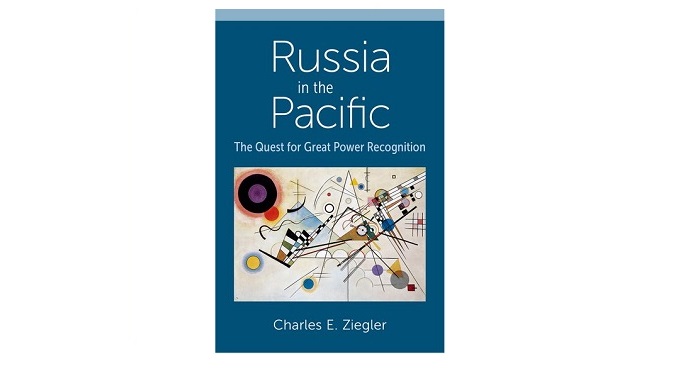
Charles E. Ziegler, Russia in the Pacific: The Quest for Great Power Recognition, Oxford University Press, 2024, 292 pp.
The world’s attention was intensely focused on a mid-November meeting in Shenzhen, China – characterised as the first trilateral meeting among the leaders of the global powers that possess the lions’ share of the world’s nuclear weapons. Two of the participants – the US and China – rank first and second as global economic powers, and each undeniably plays a prominent military role in large parts of the Pacific region.
But what about Russia – an undoubted global strategic military power with a vast territory in Asia and a long coastline along the Pacific Ocean? Can Russia legitimately claim to be a great power in the Pacific region—defined here as a state that is able to stand up to any other state or coalition of states in the region? Charles E. Ziegler’s latest book Russia in the Pacific: The Quest for Great Power Recognition explores this puzzle. Newly published in a paperback edition on the very day of the Shenzhen summit, the book is a fascinating and timely study of the complex power dynamics in the Pacific region, stretching over the last century and a quarter.
In explaining why Russia has struggled to achieve its ambitions as a Pacific regional power, Ziegler cites a variety of factors that have prevailed from late Tsarist times through the Soviet period and into the long Putinist period. Prominent among these are structural factors of geography, demography, and a weak economy.
As rulers of the world’s largest continental land mass, the Tsars focused on ambitions and rivalries in Europe from the time of Peter the Great, even though about three-forths of the Empire’s territory eventually stretched across Asia, from the Ural Mountains to the Pacific coast. The vast distances and harsh climate made construction of infrastructure (especially rail transportation) extremely challenging, moreso because the territory was so sparsely populated (even today containing less than a quarter of Russia’s population, little of it ethnic Russian in composition). Indeed, for long periods of its history, large portions of the work force in the Russian Far East was technologically backward, often consisting of indentured labour. Under the last Tsar, Nicholas II, more visionary advisors such as Sergei Witte sought to intensify economic development in the Far East, even as the territory became more vulnerable to the ambitions of imperial Japan. A humiliating and disastrous war with Japan in 1905 led both to rudimentary efforts by reformist Ministers to salvage the Russian monarchy, but ultimately to its collapse in war and revolution.
Throughout almost all of its history as part of the Russian Empire or of the USSR, this territory has been ruled (always autocratically and often badly) from the distant capitals, St. Petersburg or Moscow. To secure the vast territory, with its rich but difficult-to-exploit natural resources, Ziegler shows that Russian rulers have sought to establish “buffer zones,” including former Chinese possessions (Manchuria, Outer Mongolia, Xinjiang, Tannu Tuva, and the Kuril Islands).
For Lenin and his successors, Soviet foreign policy continued to regard Europe as the primary source of threats and opportunities, while the Russian Far East “primarily remained a defensive frontier zone.” The struggle for succession to Lenin featured a vigorous debate between Trotsky’s emphasis on spreading revolution and Stalin’s appeal to the Communist bureaucracy to focus Soviet efforts on building “socialism in one country.” This rivalry played out in part in China, where it had a role in stirring a premature rising of Chinese Communists, ending in the slaughter of their urban cadres. Though Ziegler neglects to note that he had written an essay in 1918 entitled “Don’t Forget the East;” nevertheless, Stalin quickly turned the attention of the Communist (or “Third”) International (not, as Ziegler dubs it, the “Third Communist International”) away from East, Southeast, or South Asia (especially India) to what he saw as greater revolutionary potential in Europe and the Americas.
As the defeat of the Axis powers neared, in addition to acquiring a “buffer zone” or sphere of influence in Eastern Europe, Stalin at Tehran and Yalta sought to gain territorial advantages in Asia at the expense of not only Japan but also of China. Mao’s ultimate triumph in establishing a Communist regime in China in 1949 without Stalin’s aid, and the difficult negotiations for the resulting Sino-Soviet treaty, did not foreshadow an easy partnership between Stalin’s Russia and Beijing.
The decades-long split between the USSR and the People’s Republic of China, which included an intense rivalry for leadership of revolutionary forces in South and Southeast Asia and even military clashes along their long border, doomed Soviet efforts in the years of Brezhnev’s leadership to secure ascendancy in the Asia Pacific region. Ziegler notes that only during this period did Russia manage to build a credible naval presence in the Pacific. But it was in part the costly military overextension not only in this region but throughout the “Third World,” that ultimately doomed the Soviet Union. In its final years, as Ziegler notes, Gorbachev sought to salvage a viable Soviet posture in the Pacific region, but economic weaknesses again doomed the effort, as they had in earlier periods.
Yeltsin’s post-Soviet regime was fixated on dealing with domestic economic collapse, seeking aid from the West, and although Yeltsin did achieve a modus vivendi with China, the Russia that he turned over to Putin in 2000, despite its inherited strategic nuclear arsenal, had lost its great power status globally, not to mention its failure to realise its former aspirations to regional great power status in the Pacific.
Having traced Russia’s geopolitical and economic challenges through the past century and more, Ziegler ably shows how Vladimir Putin pursued his quest to restore Russia’s great power status, both globally and in the Pacific region. Putin’s restoration of the “power vertical” restored Moscow’s ability to command the Russian Far East. He reverted to the authoritarian patterns of earlier times, centred around the personality and predispositions of the President, and he gradually abandoned Gorbachev’s and Yeltsin’s search for partnership with the US and Europe in the hope that it might result in securing security and economic opportunity for Russia.
Rather, as Ziegler shows, Putin’s emphasis on Russia’s Eurasianist identity, both as a geopolitical reality and as a distinctive (non-Western) “civilisational” orientation, underscored a foreign policy direction that led ultimately to a confrontation with NATO and the war in Ukraine. As Western sanctions reinforced Putin’s conviction that Russia’s economic future lay in an eastward direction, Russia’s ties with a rising China became even stronger.
Ziegler dates Putin’s “pivot to Asia” from his re-election in 2012 to the beginning of his third term, and sees it symbolised in the decision to host the APEC Summit that year in Vladivostok. But neither Putin’s quest to restore Russia’s global status nor his efforts to underscore its great power status in the Pacific have fared well, largely frustrated by the consequences of his (largely personalistic) decision to launch the full-scale war in Ukraine in 2022.
Much depends on the durability of Putin’s “no limits” ties with China’s Xi Jinping. As Ziegler puts it, “Russia’s partnership with China is vitally important because it has obviated the historic preoccupation with simultaneous security threats from West and East.” Although Russia is the economically- (and probably militarily-) weaker partner, in danger of falling into the role of raw-material supplier, it retains its confidence that it rightfully occupies a great-power role—and, although Ziegler notes that there are many in the Russian Far East and elsewhere who voice continuing suspicion of the relationship - it is this “identity” component that he often cites as a constant in Putin’s apparent confidence in Russia’s security.
Readers in South Asia will be especially interested in Ziegler’s contention that Russia (and China) reject the “Indo-Pacific” label that has been common in Washington and elsewhere in recent years. As India has hedged its own bets with its association in the “Quad” with the U.S., Japan, and Australia, so Russia has hedged its own reliance on China by cultivating ties with India, Japan, and South Korea.
It is this issue of “labels” that raises the broadest criticism of Ziegler’s approach, in an otherwise steady and confident analysis. The title of his book refers to “Russia in the Pacific,” and yet rarely do the Russians themselves use that terminology to refer to their regional aspirations. “Asia Pacific” is a far more common term in Russia, and Ziegler himself uses it rather often (as he even does ”Asia [Indo] Pacific”). Indeed, lacking a “blue-water” naval presence (save for parts of its submarine fleet) in the Pacific Ocean, Russia’s security and economic interests are much more limited to the bordering marginal seas (Bering, Okhotsk, Japan) than to the wider Pacific.
This point of terminological confusion should not, however, obscure the broader judgement: Ziegler’s book, now available in paperback, is a valuable addition to the scholarly and policy works that reflect on both the historical and conceptual roots of Russia’s challenging presence in Asia. And it is an especially timely contribution to our understanding of the background of the emerging triangular relationship just on display in Shenzhen.
Disclaimer: Views expressed are of the author(s) and do not necessarily reflect the views of The Statecraft Institute.