Japanese Prime Minister Takaichi’s Visit to India
- Author
- Published on
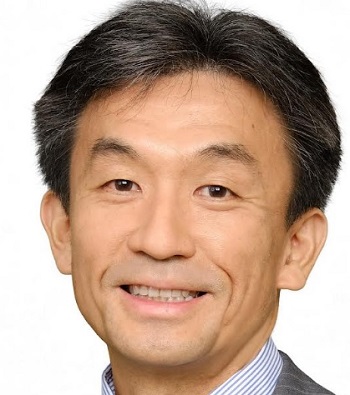
Japanese Prime Minister Sanae Takaichi’s visit to India from 1 to 3 July 2026 was intended to deepen the Japan–India “Special Strategic and Global Partnership.” Although the strong interest of both sides in strengthening bilateral relations was evident, a direct summit meeting had been long awaited since Takaichi assumed office in October 2025. The delay was largely attributable to her initial prioritisation of relations with US President Donald Trump and other Western leaders. After visiting the United States, Vietnam, Australia, the Republic of Korea, and Italy, as well as attending ASEAN-related meetings in Malaysia, the APEC summit in South Korea, the G20 summit in South Africa, and the G7 summit in the United Kingdom, India became her latest major bilateral diplomatic destination.
The so-called Quad summit involving the United States, Japan, India, and Australia has been repeatedly postponed, partly because of the strained relationship between the United States and India over tariffs and other issues. At the same time, following heightened tensions with China triggered by Takaichi’s own ill-considered remarks concerning the Taiwan Strait, Japan had an additional reason to reaffirm its commitment to India. The general assessment is that Takaichi succeeded in establishing a personal relationship with Indian Prime Minister Narendra Modi. It nevertheless remains uncertain how the two countries will further develop and broaden their bilateral relationship in an increasingly volatile international environment.
Takaichi and Modi reached agreements across a wide range of areas. In parallel, the Japan–India Economic Forum, attended by more than 150 Japanese companies, underscored the two countries’ commitment to expanding economic ties. One of the symbolic highlights of the visit was the two leaders’ joint attendance at the inauguration ceremony for Maruti Suzuki’s new manufacturing plant in Kharkhoda, Haryana.
Japan pledged US$62 billion in investment in India over the next decade. Through the Japan–India Economic Forum, 129 private-sector cooperation documents were concluded, generating business opportunities valued at more than ¥2 trillion. The two governments also signed the Japan–India Joint Declaration on Economic Security Cooperation, strengthening collaboration in five strategic sectors: semiconductors, critical minerals, information and communications technology, clean energy, and pharmaceuticals. The declaration is intended to enhance the resilience of bilateral supply chains.
Japan and India also established their first framework for the joint development of defence equipment, agreeing to co-develop and co-produce the UNICORN naval integrated antenna system. This represents a significant step beyond defence dialogue and joint military exercises towards cooperation in advanced defence technologies.
The two countries also launched the Japan–India CBG Initiative, under which Japan will support the construction of 1,000 biogas plants using cattle manure and other biomass resources across India. The initiative is expected to contribute to India’s energy security. In addition, the two governments issued a Joint Statement on AI Cooperation, strengthening collaboration in trustworthy AI governance, research, standardisation, and capacity-building.
India’s leading newspaper, The Hindu, characterised the visit as an effort to “ring-fence” bilateral relations from uncertainties in the broader multilateral environment. This interpretation suggests that, amid growing international uncertainty –including declining US interest in the Quad, the tariff policies of the second Trump administration, and deteriorating security conditions in the Middle East–Japan and India are seeking to reinforce their bilateral partnership as a stable foundation insulated from external disruption.
Former Prime Minister Shinzo Abe prioritised Japan’s relationship with India during his second period in office from 2012 to 2020, and the Modi government consistently responded positively. During this period, the foundations of the Quad were consolidated within the broader framework of the Free and Open Indo-Pacific (FOIP). Abe’s initiatives were intended to draw India closer to the US-centred regional security architecture in response to China’s growing power. At the same time, he carefully avoided creating the impression that Japan was seeking to establish a formal military alliance with India. Instead, he helped consolidate a flexible framework in which India could participate regularly in multilateral cooperation with Japan, the United States, and Australia.
Although Takaichi identifies herself as a loyal disciple of Abe, she has shown less interest in articulating grand strategies, civilisational visions, or broad geopolitical narratives. Despite the generally favourable state of bilateral relations, she did not place particular emphasis on Japan’s commitment to FOIP. This reflected, in part, the diminished interest of the Trump administration in such a strategic vision. Instead, Takaichi sought to develop a new sphere of practical defence cooperation. The two countries now appear inclined to pursue more tangible outcomes from their bilateral partnership.
Japan has an increasingly confrontational relationship with China. India has a deeply antagonistic relationship with Pakistan, while its relationship with Bangladesh remains uncertain. The challenge for Japan and India is therefore to extend their network of partnerships to other countries, particularly if the Quad becomes less effective as a diplomatic and strategic framework.
In this context, Takaichi highlighted a vision for developing an industrial value chain connecting Northeast India with Bangladesh and ASEAN. Regional stakeholders are likely to pursue greater economic and logistical connectivity regardless of Japanese involvement. For Japan, however, participation in regional development linking South Asia and Southeast Asia is strategically important. A revised and more practical version of FOIP for Japan and India may therefore need to be developed through cooperation with Bangladesh and the countries of ASEAN.
Disclaimer: Views expressed are of the author(s) and do not necessarily reflect the views of The Statecraft Institute.